A guest post by Prateeksha Singh.
This guest post builds on research from the Futures Methods from Around the World project, explored with workshop participants at the Dubai Future Forum 2025.
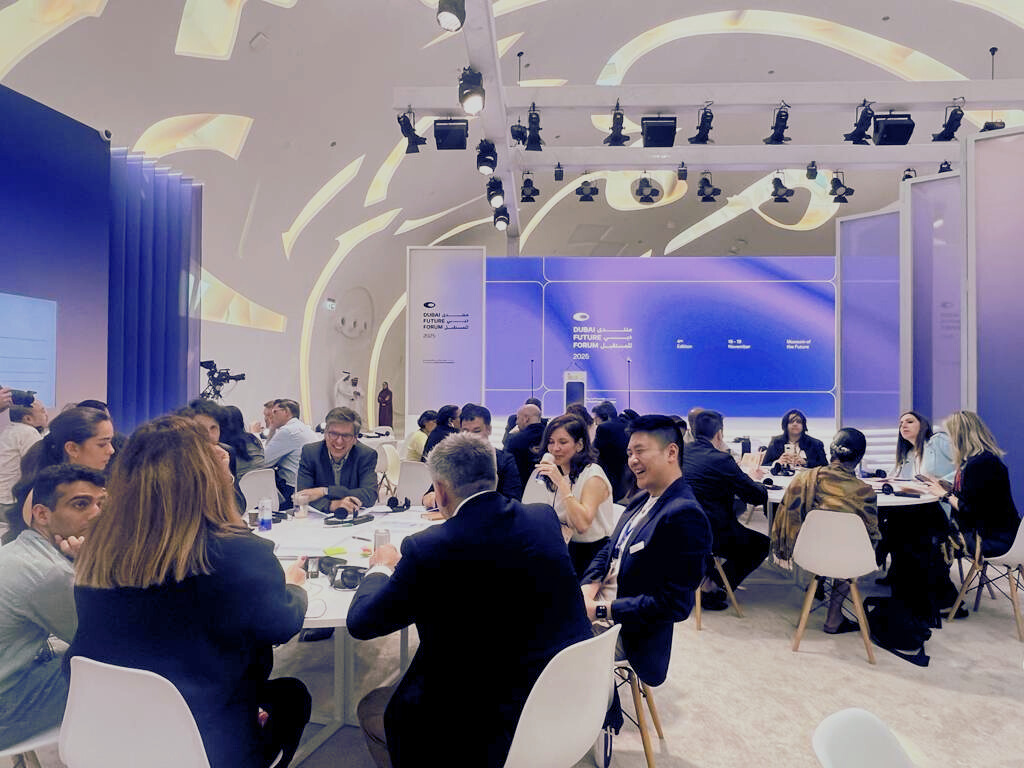
In a world of overlapping crises, expanding how we imagine the future is vital. The Futures Methods from Around the World (FMAW) initiative uncovers traditional and contemporary ways of thinking and acting from diverse communities worldwide. In its second year, the initiative comprises a team of seven researchers in five countries (Aotearoa NZ, Egypt, India, Mexico, Uganda) and its intention is to challenge dominant narratives by showcasing underrecognised world views. The initiative held an interactive workshop at Dubai Future Forum 2025, inviting participants to engage with its multi-cultural research on five specific topics – time, trust, agency, infrastructure (social and physical) and stewardship models. To enable this, the team created zines for each topic, showcasing research from different countries alongside ‘what if’ provocation questions to prompt readers to reflect on what could change 20 years from now if this submission were more mainstream.
Rather than offering ready-made tools, the work is intentionally exploratory – creating space for reflection, dialogue and alternative ways of thinking about the future.
How the workshop was structured
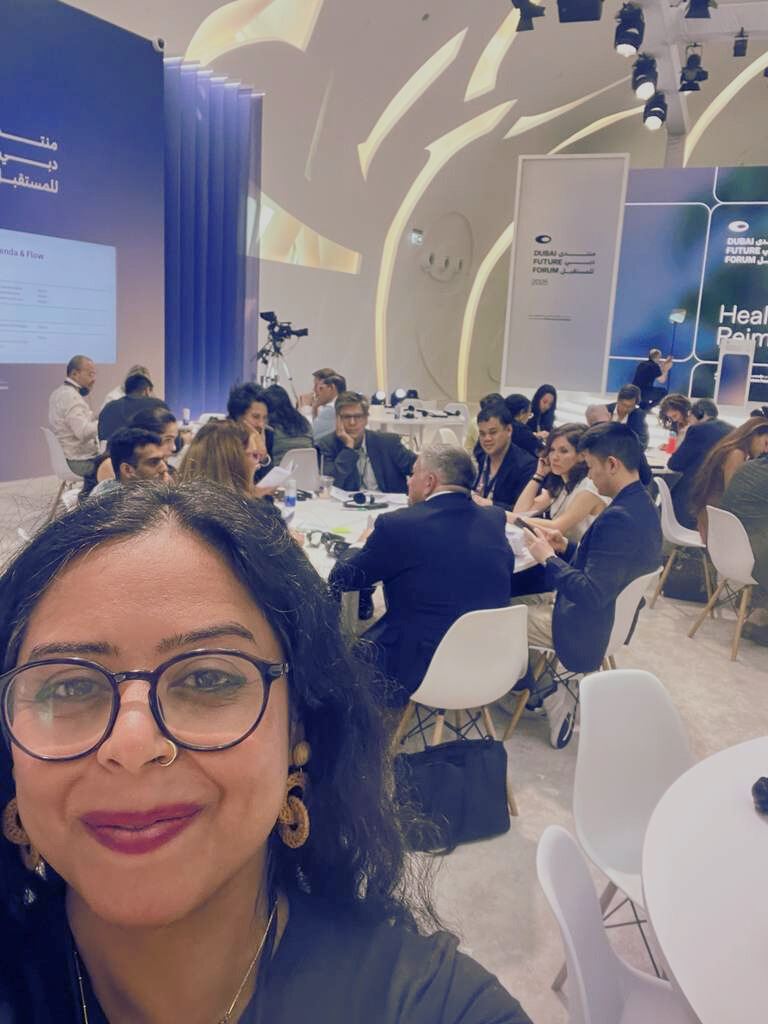
The workshop was joined by 20+ participants, from diverse geographic and professional backgrounds, and was structured such that they were given time to reflect on the research and provocations first individually, then in groups, and finally to contribute from their own cultural/individual backgrounds if something arose for them from the discussions. The 1.5 workshop allowed participants to switch tables and closely engage on at least two of the five themes. The intention was for them to explore ideas that could inspire new possibilities and alternatives in these themes and topics given their varied backgrounds.
What participants took away
The most consistent feedback we received was that people were unsurprisingly, expecting ‘methods’ in the more traditional sense – things they could ‘plug and play’ in their work and different contexts. They were surprised at how the FMAW research was more open-ended and provocative, and that while they were not walking away in the traditional sense with what they expected, they were really grateful for the richness of the research and the conversations, and the reframes several of them were walking away with. Several expressed interest in exploring how they can continue to further engage with the work.
This work is ongoing. If you have an approach or method you’d like to share, or ideas for events or spaces where this work could be explored in 2026, please get in touch with Kushal Sohal.