
After many days of protesting that engaged young people nation-wide, the fulfilment of a core-demand of an Indian students movement is the latest signal in how the subject of ‘intergenerational fairness’ or the distinct lack of it, has become a vital issue in global politics. As the world grapples with crisis upon crisis and shifts in age demographics affects power in countries like India, the realities of the unaccountable systems that young people face, their everyday concerns, fears about the world that they are inheriting, demands to be heard and reflected in policymaking, and their very own visions of the future cannot be overlooked.
Kushal Sohal writes as a futures literacy designer living in their late twenties.
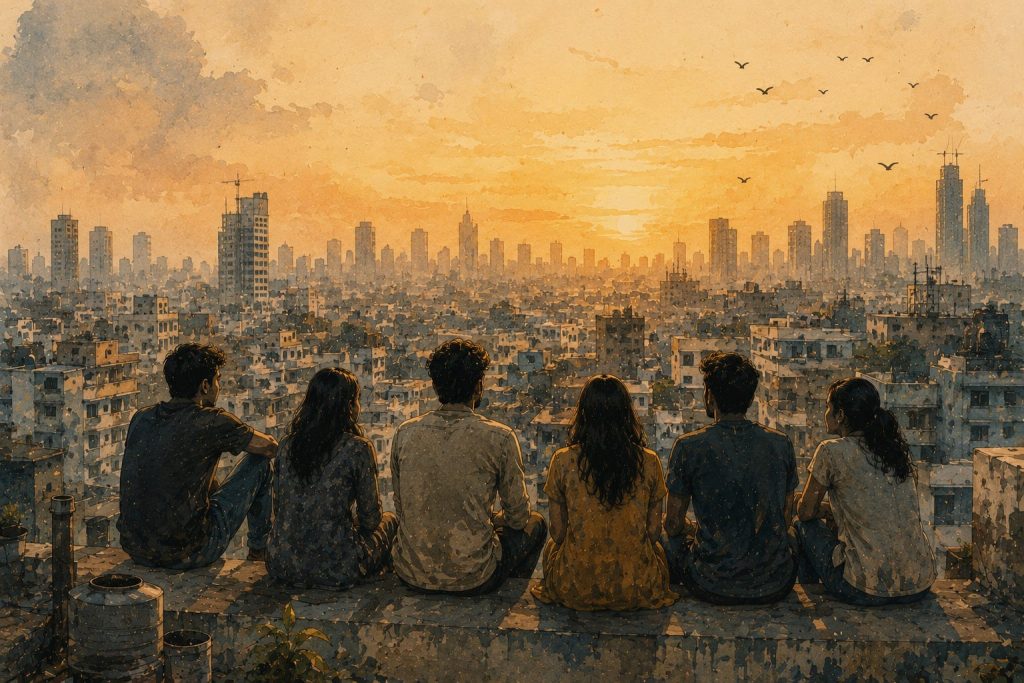
“Woh darte hain ki ek din nihatte aur ghareeb log unse darna band kardenge”
(They are scared that one day helpless and poor people will end their rule by fear)
Umar Khalid, anti-CAA activist imprisoned without trial under UAPA charges since 2020.
Cockroaches. That is what Surya Kant, Chief Justice of India (CJI), called unemployed young Indians on May 15 2026. Presiding over a Supreme Court bench, he argued they are “parasites of society” that turn to social media, journalism and RTI (right-to-information) activism in order to “attack the system”. Rather than ensuring fundamental rights, their great custodian had trampled on the dignity of young people. Social media campaigns, protests and hunger-strikes followed. The CJI, then, had inadvertently sparked a nationwide students’ movement. Viral reels thanked the CJI, referring comically to a line from the qawwali mere rashk-e-qamar by Nusrat Fateh Ali Khan – “aag aisi lagayi maza aa gaya” (you ignited such a fire in me that I felt overjoyed). Highlighting the leak of the NEET paper (the admission examination for medical colleges) and broader mismanagement within the education system, the core demand of the “cockroach” movement was for the resignation of Education Minister Dharmendra Pradhan. It sought a shift in the way politics is done – accountability, an essential element to a functioning democracy, one of many pieces of the jigsaw that has been missing in India since 2014. Finally, on the afternoon of 25 July, Pradhan gave in to unyielding pressure, offering his resignation to the Prime Minister. The first time in 12 years that any Minister had done so – a significant precedent. As scenes of jubilation erupted at Jantar Mantar in New Delhi and nationwide, there emerged a tangible feeling of hope in a more just Indian future.
“Dharmendra Pradhan toh jhaanki hai, Narendra Modi Amit Shah baaki hai”
(Dharmendra Pradhan is just the trailer, Narendra Modi and Amit Shah are still to come)
Satire has been characteristic of this movement. The mythology of a state and a leader to be feared has been dealt a blow; unapologetic mockery is the currency of GenZ resistance. These protests are alive with song and dance, even once the police unleashed brutality. In the language of students, it is “din mein lathi, raat mein party” (lathi-charged by day, partying by night). Such joyful unseriousness, and sense of community, is ultimately energised by very real grievances and anger. The movement saw not only students and parents travel from far and wide to take to the streets of the capital, but it was also met with expressions of intergenerational solidarity from daily-wage labourers, working class Indians, unions, faith groups and many across different parts of society who recognise education and opportunity as central to a larger struggle for justice and dignity. Students have died by suicide because of the incompetence of the state. The intense preparation, family sacrifices, money hard-earned and borrowed spent on tuition and travel to examination centres – all of it has been treated with disdain. The NEET paper leak is symbolic of a far deeper rot that has taken over India’s education system since 2014. This includes central government over-reach, hindu-nationalist movement Rashtriya Swayamsevak Sangh’s (RSS) influence on bureaucracy and curricula, and universities threatening their own students who dare to critique and exercise their fundamental right to protest – to grieve futures that are lost, to call for better ones to come.
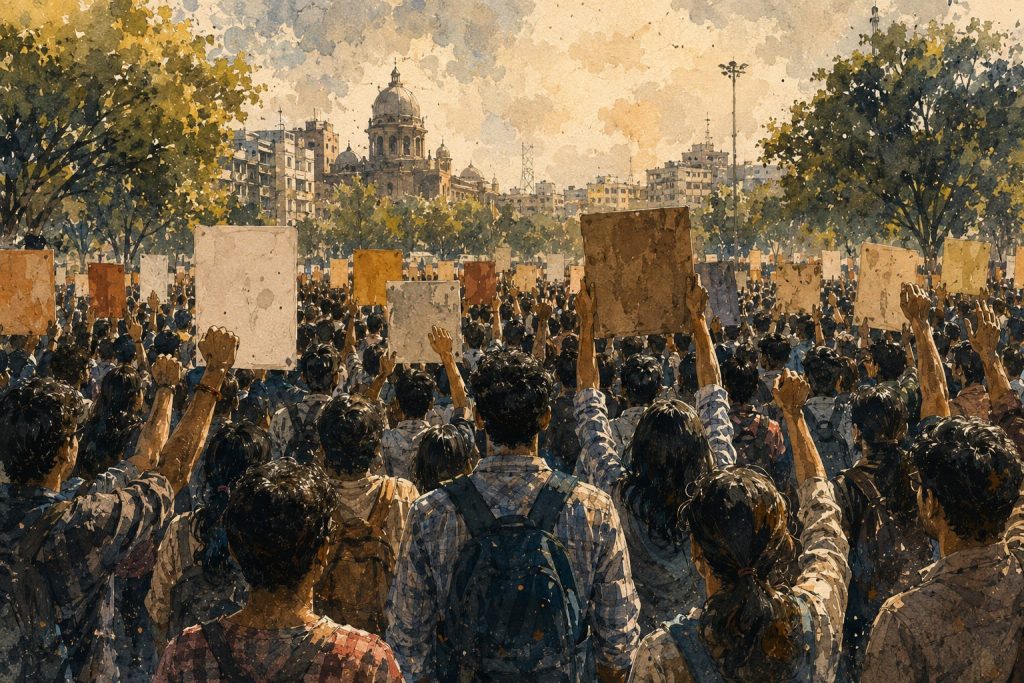
This one-issue-led movement has seen an appeal that has cut across region, religion, class and caste. There have been other mass movements since 2014 namely the anti-CAA (Citizenship Amendment Act) and farmers movements, as well as the ongoing concerns of people in Kashmir and Manipur. But it is the everyday, civic resonance with an entire generation and many more who turned out to support them, in an otherwise oppressive social order, which meant this movement gained traction, visibility and voice at such a pace that made it particularly difficult for the government to control – especially once prominent educator Sonam Wangchuk was detained on 18 July, and the students march to Parliament on 20 July was met with police brutality. Indeed, in the instance of this movement – the ruling Bharatiya Janata Party (BJP) and Prime Minister Narendra Modi have been made aware that they have lost the trust and support of children of some of their own supporters. These are not their “friends” like the mainstream media, but rather young people that have actively sought to mock and break a well curated narrative, daring to question those who have, for over twelve years, refused to engage with constructive democratic criticism.
“The world owes much to rebels who would dare to argue in the face of the pontiff and insist that he is not infallible” – B.R. Ambedkar
But can this achievement provide real momentum, can this movement now bring about systemic change? When fear starts to crack and tables turn, imagination can shine through.
“jab jab modi darta hai, police ko aage karta hai,
jab jab modi darta hai, hindu-muslim karta hai”
when modi is scared, he sends the police forward,
when modi is scared, he pits hindu against muslim
Imaginaries are shaped by our hopes and fears. The stories we are told, the beliefs we have, our lived experiences, and the emotions we feel are often projected onto the future – they govern our assumptions, they tell us what is permissible and possible. The grief, the anger, the care, the love we feel – it combines into a messy playground, an unknown, uncertain yet innately human conception of the yet-to-be. We think it, feel it, embody it. But fear and oppressive systems police our imagination. Imaginaries, therefore, are inherently political. Here, injustice lies in preventing people from anticipating a future beyond the absence of the negative, making it hard to envision beyond terms of non and not. But as fear loses some of its power and capacity to control, so too emerges the ability to dream expansively and creatively.
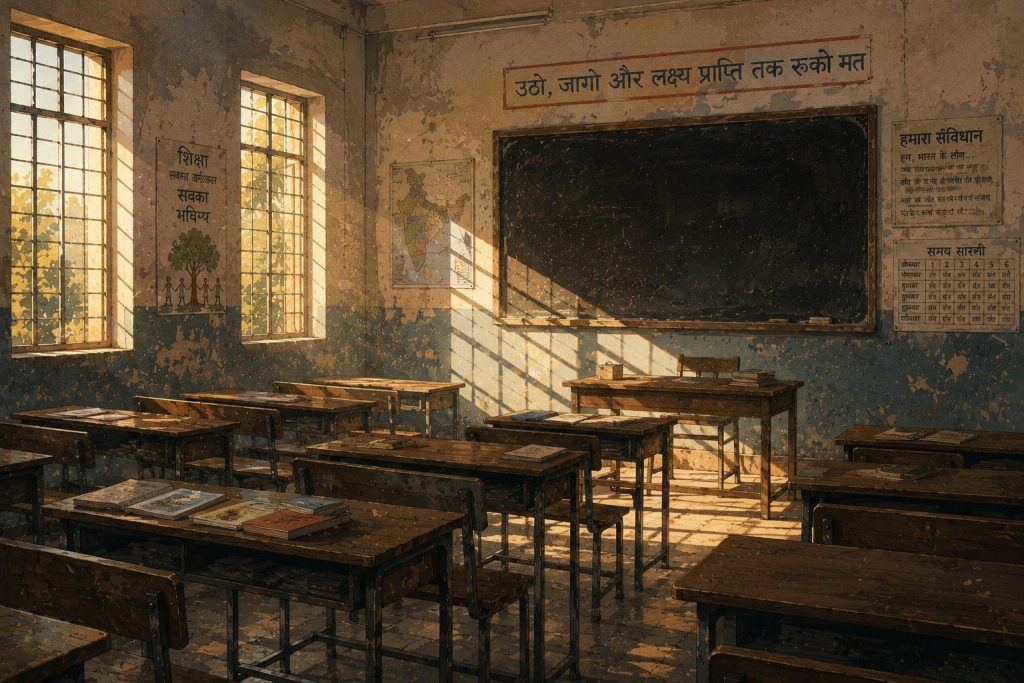
What is the future of education that Indian students want? What does that now look like?
What are the new systems, the new stories, and the new values that are needed?
How does education connect into other elements that would make for a just Indian society?
It is unclear what kind of opening has now emerged. India is not a free and fair political arena. There is a slight crack as an aura of invincibility takes a blow at the hands of GenZ, but the ruling BJP and its state machinery remains incredibly powerful – momentum is difficult to hold onto. With protests ending, the state moves on with business as usual. So, will it really feel any need to reckon with this moment and roll-back on its authoritarianism, in fear of more rising up? To what extent does it care about such issues and the believability of claims to popular support?
This movement has been one-issue oriented, reliant on a universal civic resonance. But one-issue-based politics can not transform a country’s political future alone. Does the protest simply stop here? Will there be accountability for violence unleashed by the state and justice for all that have been detained? If the system must change, can demands really stop at a symbolic resignation? Will the initiators of the movement, leaders of the Cockroach Janta Party, take up other civic issues and mobilise youth in a similar way? Might this widespread movement split as some debate affirmative action and reservations? Or perhaps it can transcend the limitations of the CJP itself? Will we see a mass youth politics that speaks of injustices that are also specifically identitarian in nature too, namely those that particularly affect the most marginalised groups in Indian society – Muslims, Dalits, Adivasis?
On the morning before Pradhan’s resignation, standing side-by-side leading student activists from across this movement including Neha Bora (President of the All India Student’s Association), Rahul Gandhi, the Leader of the Opposition and Indian National Congress politician, said:
“band karna hai, band karo. dhamkana hai dhamkao, hum nahin hatne wale hain. yeh nahin hatne wale hain. yeh hindustan ka bhavishya hai, inhen dekh lo acchi tarah. inse koi nahin lad sakta.”
If you want to shut it down, shut it down. If you want to threaten, threaten. We are not going to back down. They are not going to back down. This is the future of India, take a good look at them.
No one can fight them.
“Narendra Modi is India’s past. The past can never fight the future”, Gandhi added.
The opposition sees students as the future, they who have “looked fear in the eye” as Neha Bora has written in her own reflections on the protests.
Will the opposition now work with these students and the broader movement to go beyond fear, to envision and realise the India of their dreams? Can they use this hopeful moment to take the conversation forward in a society that remains deeply divided?
As one educational and political organiser told me, “moments like these are not only about responding to events, but also about supporting people to imagine the kind of democratic future that we want to build.”
Like many right-wing parties around the world, the BJP has long shown their own proficiency in storytelling and visioning. The Indian liberal-left coalition now needs to demonstrate that they have their own. Else, a more just Indian future will continue to feel far beyond our reach.