Portugal Hub: Catalysing a national movement through the Future Generations Summit
Challenge
Approach
Outcome
Long-term governance needed a moment of national visibility in Portugal, after a long history of leading on the intergenerational fairness agenda, momentum was slowing. What was required was a convening capable of bringing government, academia and civil society into the same room, building public support, and turning scattered interest into a coordinated movement with the capacity to sustain itself beyond a single event.
The Hub organised Portugal’s first Future Generations Summit, convened by SOIF, Futura Foundation and ZERO, in partnership with PLANAPP, Universidade Católica Portuguesa, Oikos, Transformative Times, L3P/Universidade de Aveiro and Comunidade Lidera.
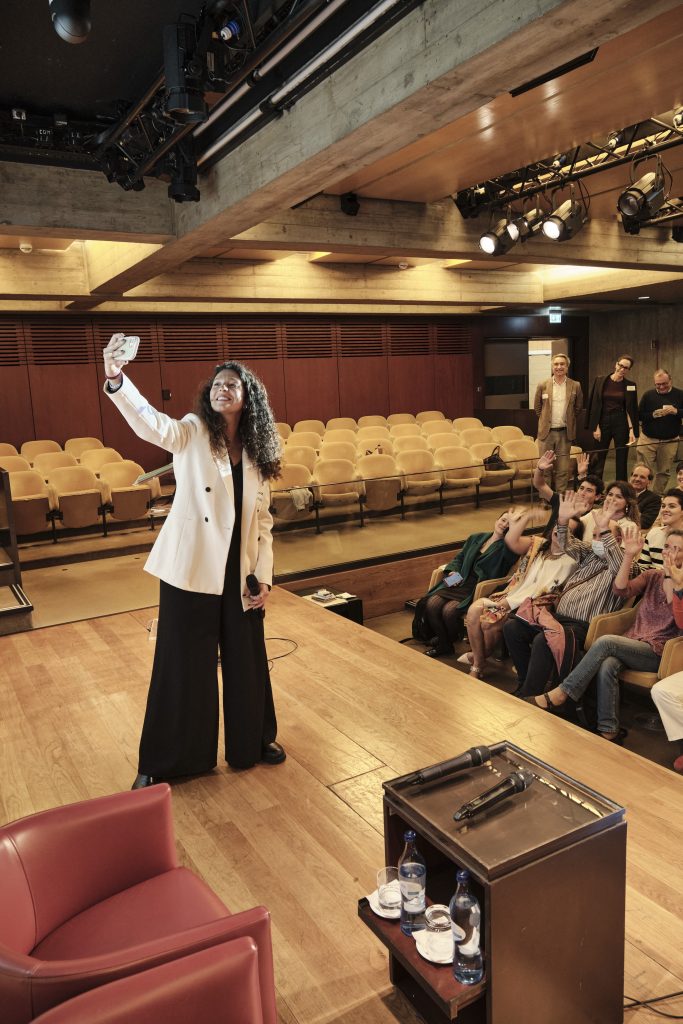
Hosted at the prestigious Calouste Gulbenkian Foundation, the Summit brought together over 60 representatives from government, academia and civil society.
Institutional messages from leaders across the United Nations Secretary-General’s Office, the European Commission, Italy’s Ecosistema Futuro, and SOIF’s Spanish Hub reflected growing international momentum behind long-term governance. Four parallel working sessions generated rich collective intelligence, captured in a published summit report.
A co-designed strategy for activating long-term governance in Portugal. The Summit’s key outcome was the launch of Expanding the Portuguese Hub for Future Generations: A Roadmap a co-designed strategy rooted in what participants shared, debated and imagined together. The Summit galvanised Portugal’s long-term governance movement, built public support, and brought new members into the Hub community.
Activated political and policy stakeholders. Beyond the Summit, the Hub continues deepening its relationship with PLANAPP, the government’s foresight and planning department, raising awareness of legislative approaches to future generations.
Increased capacity for Hub sustainability. With SOIF’s support, the Hub now has additional capacity to drive an ambitious expansion in 2026, including the operationalisation of two of five planned working groups spanning Intergenerational Governance & Law, Education & Foresight Literacy, Participatory Futures & Culture, Sustainable Economy & Intergenerational Finance, and Territorial Cohesion & More-than-Human Governance.