Next Generation Foresight Practitioners: Weaving networks for collective action
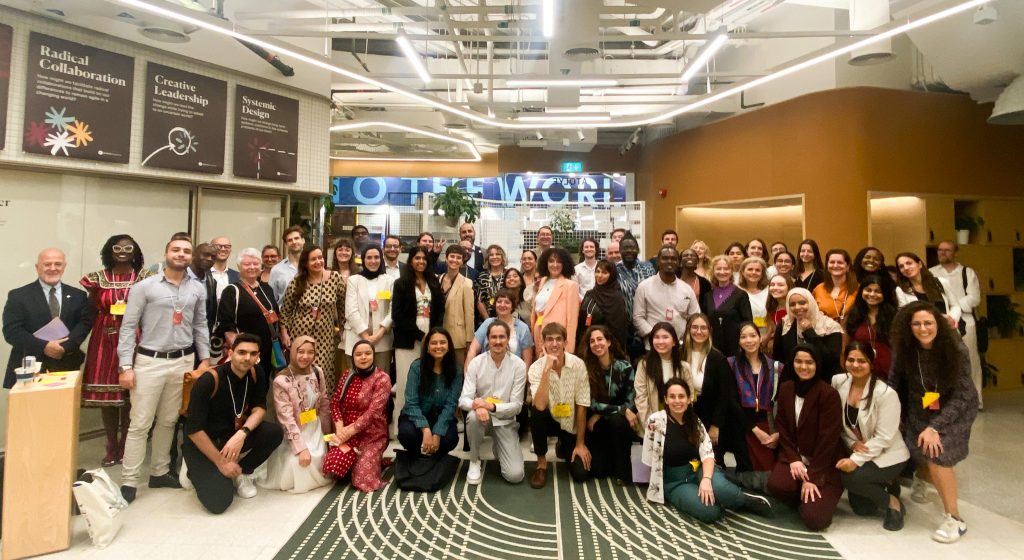
An initiative led by the School of International Futures, the Next Generation Foresight Practitioner Fellowship supports emerging foresight practitioners via training, mentorship, funding and opportunities to help bring their change-making projects to life. Each year, 25 Fellows are offered a place, with a further few hundred people being invited to join the wider network. In early 2026, the global network stands at over 1,000 members.
Underneath the more tangible activities that take place across the 12 month programme, a less visible power is at work: network weaving. This has been defined as ‘the purposeful process of identifying, nurturing, and strengthening relationships between people and groups to create healthier, more resilient, and collaborative communities’ and has often been noted by members as the most valuable aspect of NGFP. Weaving takes place across Fellowship cohorts, countries and cultures and facilitates a degree of action that individually, would not be possible.
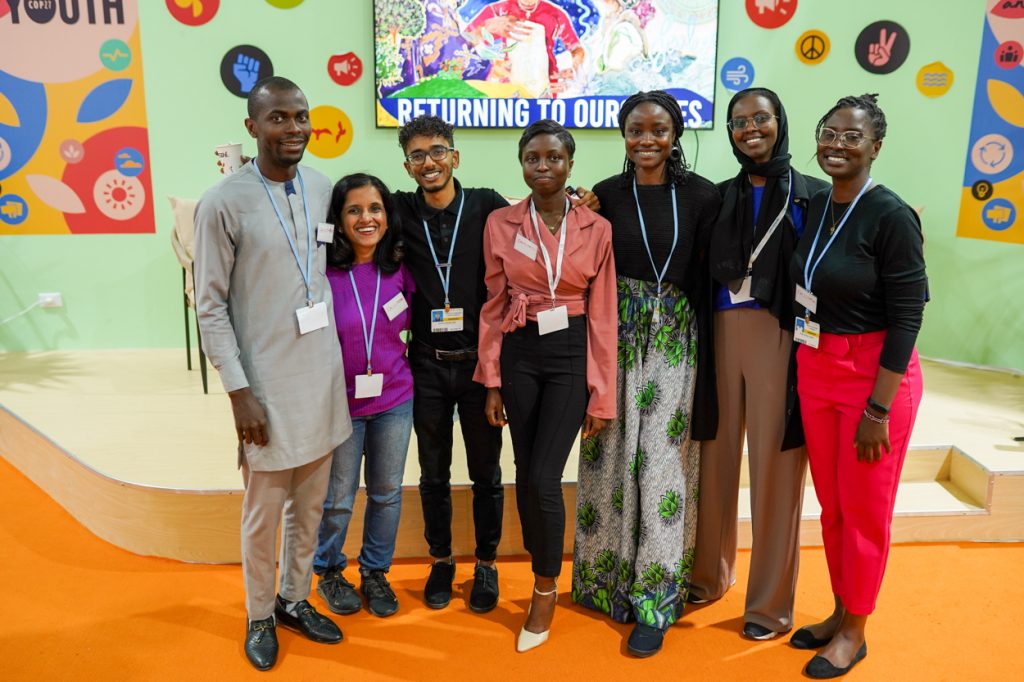
The world often only witnesses the end product, or public output of this; the manifesto, the event, the podcast etc, but it’s the less obvious, harder to measure aspects of this work that lay the foundations for longer-term systemic change. The NGFP thematic Hubs live this as a practice. They create connection for people and ideas, a sense of belonging and importantly, allow NGFP to create the conditions for change to occur. This is the quiet work of the weaver that deserves to be heard. In 2022, 18 members of the Climate & Energy Futures Hub had been meeting regularly to explore how their collaborative foresight practice could contribute to global systems change in the climate space. Stewarded by NGFP’s Passy Ogolla, the group’s convenings were based on shared problem solving, capacity building for members to develop key advocacy skills and sharing collective intelligence on climate issues and pathways. They were gaining momentum and developing readiness to react to opportunities when the call from COP27 came in. This was a monumental moment – the first ever Futures Lab in the blue zone (high-level delegates only) on a global stage, led by African youth. This was more than bringing people together to talk, this was a defining moment for using foresight in systems change, for the recognition of next generation voices in policy-led climate spaces and importantly, a demonstration of the power of networks in full force. The Hub led the Lab with an intergenerational approach to ecological issues, by leveraging their collective experiences and the skills they’d acquired during their time in the Hub; facilitation, sense-making, advocating for the future they want to be part of. It was so successful that they were invited back for COP28.
This network practice allowed those who wouldn’t ordinarily come together to curate a shared opportunity, a shared moment in the history of COP and a reputable part of the global climate conversation. The NGFP Hubs and network more widely creates spaces for new and unlikely collaborations. The majority of the collaborations we’ve witnessed in our networks are between people from different contexts and different sectors, who were unlikely otherwise to have met. Thays, a feminist futurist from Brazil, and Abril, a participatory futures expert from Mexico, have launched a ‘Women Who Future(s)’ campaign and learning journey to support women in the field. Aditi, a policy researcher in the US and James, a civil servant working on climate risks and extreme heat scenarios in Australia, are collaborating on building the case to embed futures and foresight into public policy courses. Betty-Sue, a storyteller and poet from New York and Ekaterina and Eleftheria, both working in government in Greece are collaborating on a women in futures and democracy network. Three grief practitioners in Canada, Ammaarah, a peacebuilding researcher in Sri Lanka and Nzwaki, a trauma-informed practitioner working to dismantle gender-based violence and structural racism in South Africa are collaborating to surface the landscape of personal risks of foresight. Were it not for SOIF, none of these folks would have met, and yet their initiatives are having impacts and reach far beyond that which SOIF could support directly.